After Dark: The New Language of Modern Luxury
From illuminated skylines and late-night drives to fashion, dining and nightlife, modern luxury is becoming less about ownership and more about experience.
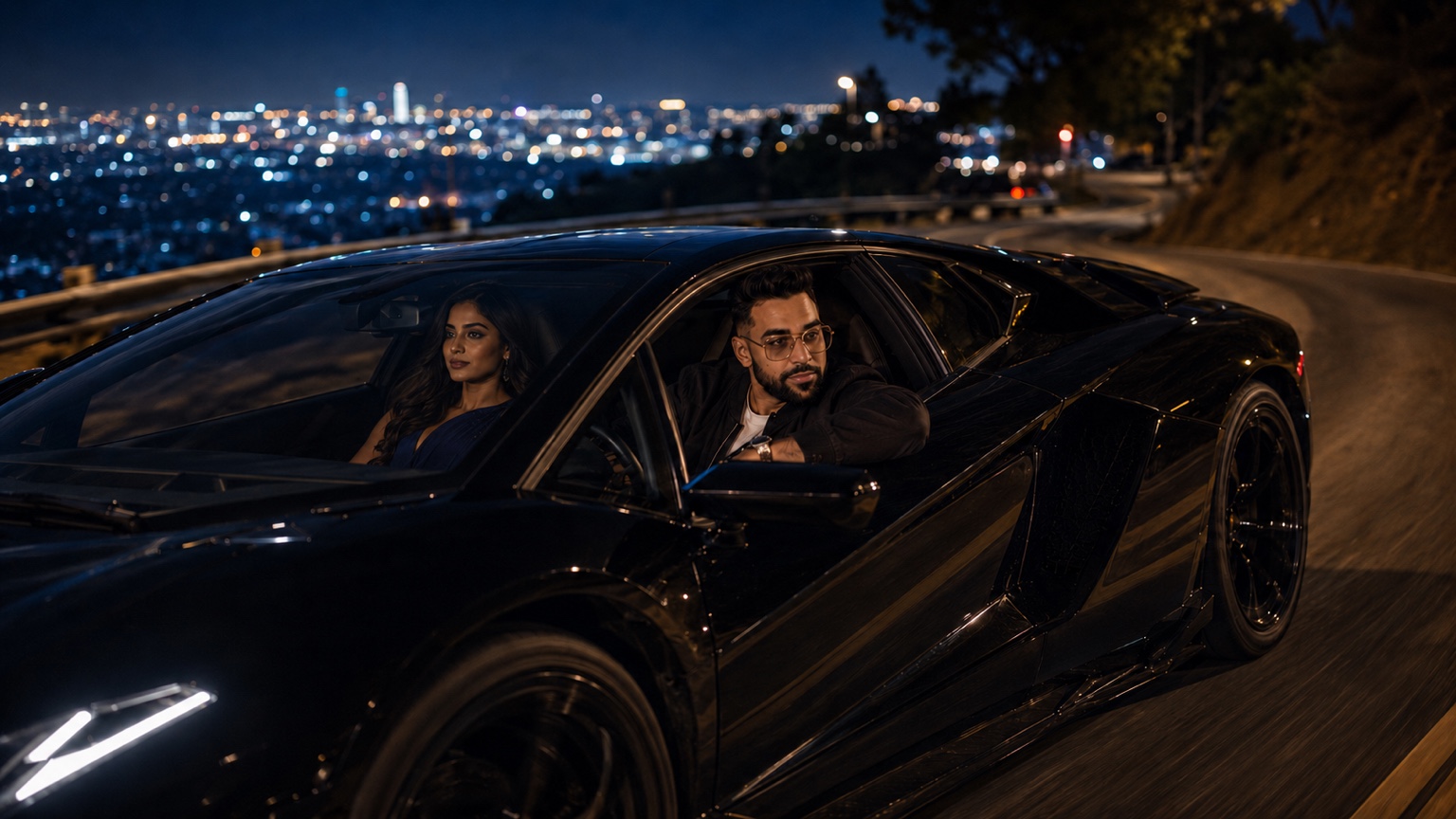
There is a particular moment when a city changes.
The offices empty. The roads become quieter. Glass towers begin to glow against the night sky, headlights trace the curves of elevated roads, and restaurants, hotels and rooftop spaces take on a different energy.
After dark, luxury looks different.
It is no longer only about the object itself. It is about the atmosphere around it — the car, the road, the skyline, the clothes, the music, the architecture, the company and the freedom to decide where the night goes next.
That shift points toward a broader change in contemporary luxury: the experience is becoming as important as the thing being owned.
The City After Dark
Modern luxury increasingly finds its visual language in the world's great cities.
At night, architecture becomes more dramatic. Towers turn into illuminated landmarks. Roads become ribbons of light. Reflections, glass facades and distant skylines create an environment that feels almost cinematic.
The city is no longer simply the background.
It becomes part of the experience.
A beautifully designed hotel, an elevated restaurant, a private lounge or a quiet road overlooking the skyline can transform an ordinary evening into something deliberately composed.
This is one reason the contemporary luxury aesthetic often feels less like a showroom and more like a scene from a film.
The Drive Becomes Part of the Experience
Few objects illustrate this change better than the automobile.
A luxury car has traditionally been associated with engineering, craftsmanship, performance and status. Those qualities still matter. But the modern luxury experience extends beyond specifications.
There is the feeling of entering a carefully designed cabin at night. The quiet of the interior. The glow of the dashboard. The road opening ahead. The city moving past the windows.
The destination is only one part of the journey.
The drive itself becomes an experience — a private moment of movement, comfort and freedom.
In that sense, the automobile becomes less of a product and more of a personal environment.
When the Skyline Becomes the Setting
A skyline carries a certain psychological power.
From a hillside road, a rooftop terrace or the window of a high-rise hotel, the city can feel both enormous and strangely intimate. Thousands of lights suggest possibility, movement and access to a world that continues long after the working day has ended.
That atmosphere has become central to modern luxury storytelling.
Luxury is increasingly presented in relation to where it happens: the district, the architecture, the view, the road, the hotel and the people around it.
The setting gives the object meaning.
Nightlife, Dining and Hospitality
Luxury after dark also lives in experiences that cannot simply be taken home.
A late dinner in a destination restaurant. A rooftop overlooking the city. A beautifully designed hotel lobby. A private lounge. A carefully curated evening where lighting, sound, service and design work together.
Hospitality has understood this transformation particularly well.
The most memorable premium experiences are rarely about one element. They are about coordination — the welcome, the architecture, the service, the food, the view and the feeling that every detail has been considered.
Luxury becomes an environment that surrounds the individual rather than a product that sits on a shelf.
Fashion Without the Need to Shout
Fashion is undergoing a similar transition.
The strongest expressions of contemporary luxury do not always depend on visible logos. Tailoring, proportion, texture, materials and restraint can communicate confidence without demanding attention.
After dark, this becomes even more pronounced.
A dark jacket under city lights. A carefully chosen watch. Minimal jewellery. Polished footwear. A distinctive silhouette.
These details create a language of identity.
The question becomes less about proving how much something costs and more about communicating who you are.
Freedom Is Becoming a Luxury
There may be an even deeper reason this new language of luxury is gaining influence: time and freedom are increasingly valuable.
The ability to leave when you want. To choose where you spend the evening. To move through a city without rushing. To create an environment that reflects your own taste.
These are difficult things to measure, but they are easy to feel.
And that is precisely what makes them powerful luxury experiences.
From Possession to Experience
None of this means that traditional luxury has disappeared.
Exceptional cars, watches, fashion, jewellery, architecture and design still carry enormous appeal. What is changing is the context in which people experience them.
The object increasingly becomes one element inside a larger story.
A car is part of a journey. Fashion becomes part of an identity. A hotel becomes part of a memory. A restaurant becomes part of an evening. A city becomes part of the atmosphere.
The individual pieces still matter — but the experience connecting them may matter more.
The New Luxury Consumer
The emerging luxury consumer is therefore not necessarily asking only, “What can I own?”
They may also be asking:
What can I experience? Where can I go? How does this make me feel? Does it reflect who I am? Will I remember it?
Those questions are reshaping luxury across automobiles, fashion, hospitality, travel, dining and culture.
The premium market is becoming increasingly experiential because experiences create something products alone cannot always provide: a personal story.
After Dark, Luxury Becomes a Feeling
Perhaps that is why the night has become such a powerful setting for contemporary luxury.
Darkness removes some of the noise. The skyline becomes softer. Details become more intentional. Movement becomes more cinematic. A road, a car and a city can suddenly feel like part of the same composition.
And somewhere inside that composition is the idea that luxury has evolved.
It is still about exceptional things.
But increasingly, it is about exceptional moments.
Maybe modern luxury isn't about what you own. Maybe it's about how you experience life.
Image created/edited for this editorial.