Can a Flying Tesla Really Work in India?
“Elon Musk continues to inspire generations to imagine beyond conventional limits. The most interesting part is not whether everyone will one day drive a flying car. It is that people are being encouraged to ask what a car could become.” — KC
An independent GCT opinion on Tesla’s Roadster, future mobility, and whether Indian cities are ready for the infrastructure, regulation and safety systems airborne transport would require.
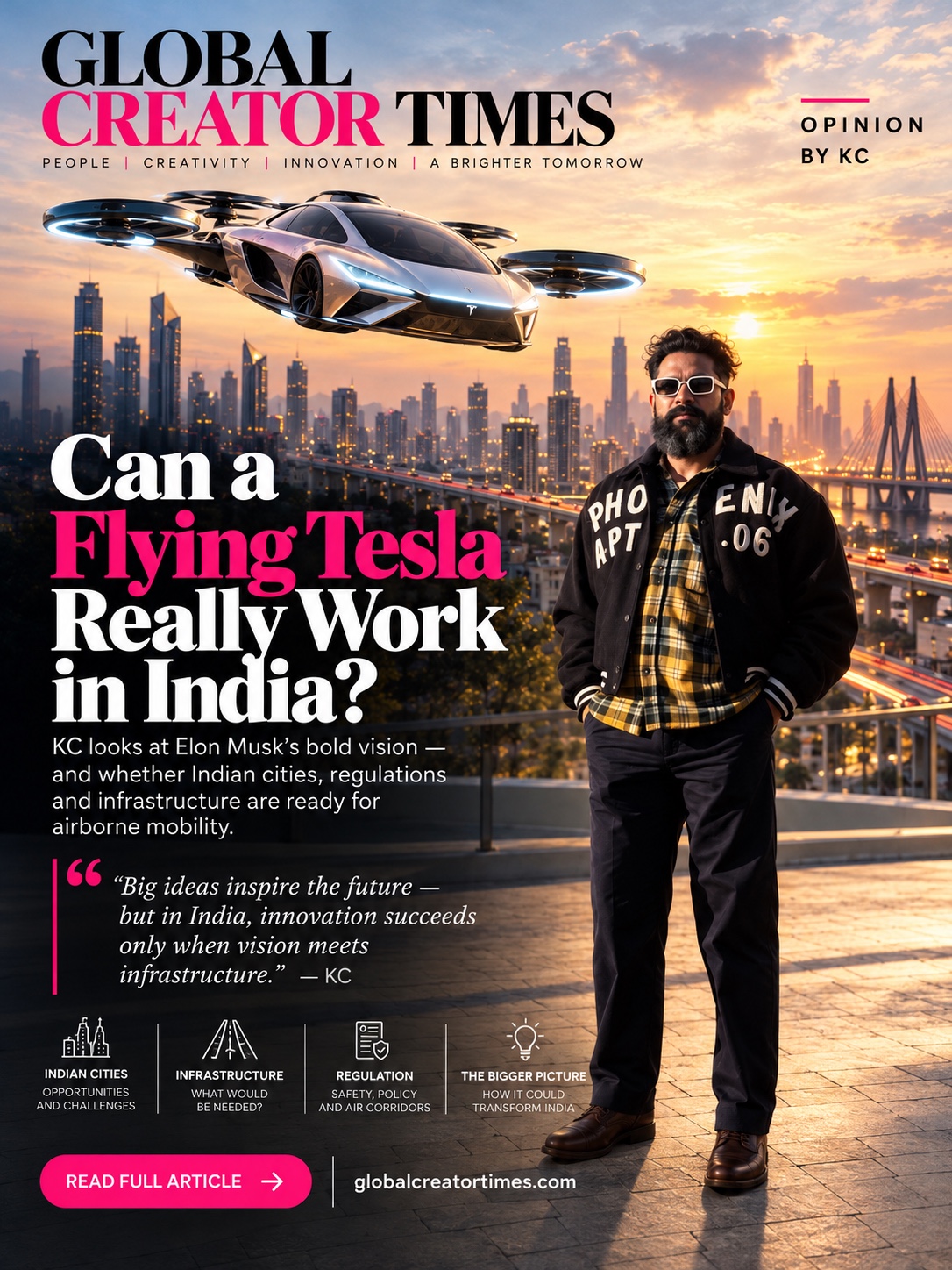
Tesla’s latest Roadster reveal has once again done what Elon Musk-led products often do: make people question where the line between imagination and engineering actually sits.
At Tesla’s October 15 reveal, the redesigned next-generation Roadster demonstrated SpaceX-developed rocket-style thrusters and brief airborne manoeuvres. Tesla said production is targeted for 2028. The vehicle is not a conventional flying car or an air taxi, but the demonstration pushed the Roadster beyond the expectations normally attached to a high-performance electric sports car.
A Roadster that challenges the definition of a car
The new Roadster sits at an unusual intersection of automotive engineering, aerospace thinking and experimental performance.
Its importance may not come from becoming a mass-market vehicle. The bigger value may be symbolic: proving that the boundary around what a road car can attempt is still open to challenge.
Some products are built primarily to sell in volume. Others exist to move the edge of what people believe is possible. The Roadster increasingly looks like the latter.
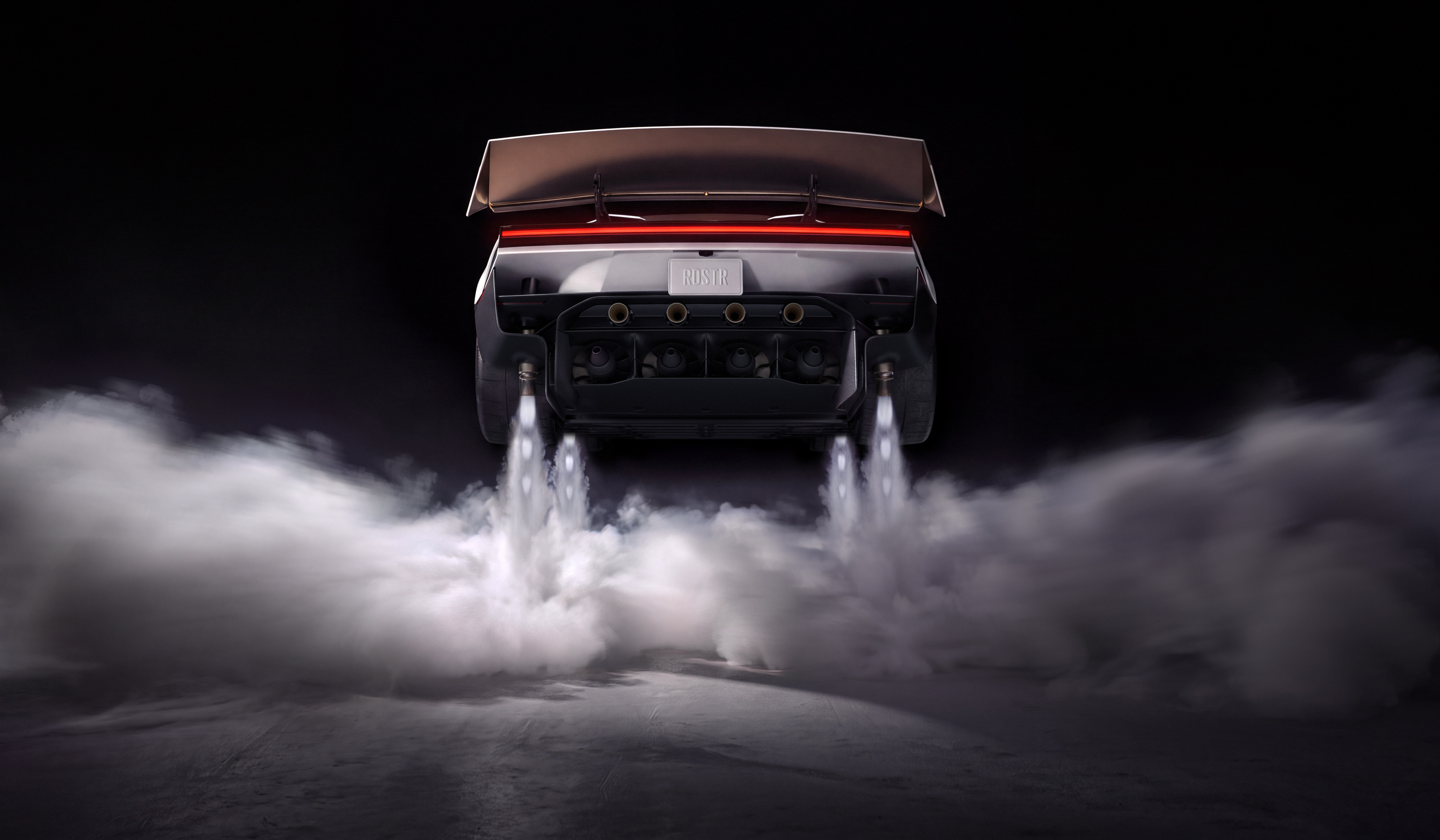
Courtesy of Tesla, Inc.
KC Opinion: the bigger story is inspiration

Location: Czech Republic · Photo courtesy of KC
For KC, Elon Musk’s influence goes beyond any single Tesla model. The recurring pattern is a willingness to place difficult ideas into public view and make people imagine beyond conventional limits.
“Elon Musk continues to inspire generations to imagine beyond conventional limits. The most interesting part is not whether everyone will one day drive a flying car. It is that people are being encouraged to ask what a car could become.” — KC
Not every ambitious idea will scale immediately. Not every technology will become practical everywhere. But innovation can matter before mass adoption if it changes what the next generation of engineers, founders, designers and creators believe is worth attempting.
But could something like this actually work in India?
This is where inspiration meets reality.
India is one of the world’s most dynamic mobility markets, but its largest cities also present unusually complex conditions for airborne personal transport: dense urban development, crowded road networks, highly variable infrastructure, restricted airspace, large populations living close together, emergency-response requirements, noise, safety, and the need for controlled take-off and landing locations.
A Roadster briefly leaving the ground during a controlled demonstration is one thing. Integrating airborne vehicles into Mumbai, Delhi, Bengaluru, Hyderabad or other dense Indian cities would be a fundamentally different challenge.
The infrastructure question
If airborne mobility ever moves beyond demonstrations and niche applications, India would need much more than the vehicle itself.
A practical ecosystem could require dedicated landing zones, approved air corridors, digital traffic management, emergency protocols, charging systems and clear separation between conventional road traffic and airborne movement.
Even conventional electric mobility has required years of charging-network expansion and policy coordination. Airborne mobility would add another level of technical and regulatory complexity.
Safety and regulation would come first
The central question would not simply be whether a vehicle can leave the ground. It would be whether it can do so repeatedly, safely and predictably around millions of people.
Weather, building heights, airports, helicopter routes, restricted airspace, emergency landings and certification would all become part of the operating environment.
That is why any true airborne-mobility system would almost certainly be regulated very differently from an ordinary road vehicle.
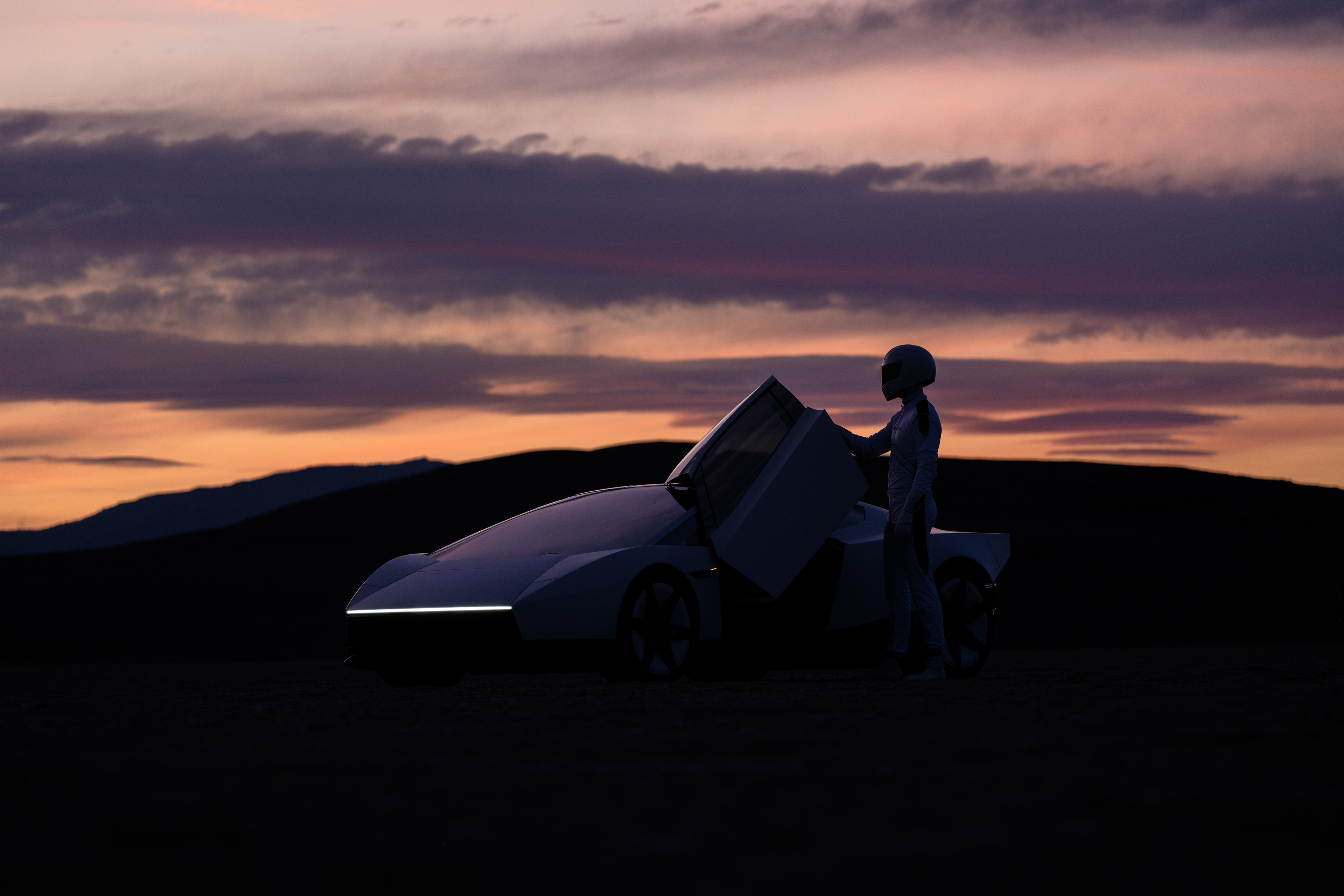
Courtesy of Tesla, Inc.
India also represents enormous opportunity
The challenges should not obscure the opportunity.
India’s scale means that successful mobility innovation can have enormous impact. If a future category of safe airborne transport becomes commercially viable, Indian cities could eventually have compelling use cases such as airport transfers, emergency medical movement, connections across difficult urban corridors, high-value business travel and links between satellite cities.
But the first realistic applications would probably look very different from millions of privately owned flying cars moving freely above city streets. The more plausible path would be controlled, regulated and purpose-specific.
Innovation has to meet urban reality
The Roadster can be admired for what it represents while still inviting difficult questions about implementation.
“Big ideas inspire the future — but in India, innovation succeeds only when vision meets infrastructure.” — KC
That is not an argument against ambitious technology. It is an argument for building the ecosystem around it.
India does not lack imagination. The harder challenge is converting innovation into infrastructure at the scale required by its population.
The most important effect may be inspiration
Millions of people who will never own a Roadster may still see what it represents.
A student studying engineering. A young founder thinking about transportation. A designer imagining new cities. A researcher working on batteries. A policymaker considering the infrastructure of the next decade.
Products like the Roadster can influence people who are not their customers. That may be part of their wider value.
Dream first. Build the systems next.
There is a natural tension between vision and infrastructure.
One asks, “What if we could do this?”
The other asks, “How would this actually work?”
Progress needs both.
Without imagination, cities repeat old systems. Without infrastructure, ambitious ideas remain demonstrations.
Tesla and Elon Musk are pushing the technological question. Countries such as India will eventually have to answer the practical one.
And perhaps that is exactly how major transitions begin: first someone imagines a different future, then someone proves part of it can be built, and finally cities, regulators, engineers and businesses decide whether the systems around it can become real.
Global Creator Times — independent perspectives on people, ideas, innovation and the future.