The Creator Effect on How We Eat, Move and Live
From food choices and daily movement to sleep, routines and balance, creators are increasingly shaping what healthy living looks like in everyday life.
AI Editorial — Global Creator Times.
Healthy living used to be presented as a strict formula: follow the plan, count the calories, wake up earlier, train harder and stay disciplined.
That version of wellness still exists, but something else has emerged alongside it.
Today, millions of people encounter health and lifestyle ideas through creators before they ever see them in a formal guide, health campaign or magazine. A morning walk filmed on a quiet street, a simple breakfast prepared at home, a reminder to drink water, a realistic grocery shop or an evening routine can travel further than traditional advice ever could.
The result is subtle but significant. Creators are not simply influencing what people wear or buy anymore. They are increasingly influencing how people eat, move, rest and structure everyday life.
Healthy Living Is Becoming Cultural
For years, wellness was often marketed as transformation.
There was always a “before” and “after.” A new body. A new diet. A new routine. A new identity.
Creator culture is gradually broadening that definition.
Healthy living can now look like someone taking a walk between meetings, choosing a balanced lunch, cooking at home three evenings a week or putting their phone away before bed.
None of those moments are dramatic. That may be exactly why they matter.
When healthier behaviours appear inside ordinary life rather than as extreme challenges, they begin to feel achievable. The goal shifts from becoming a completely different person to making slightly better choices more consistently.
From the Feed to the Fridge
Food may be one of the clearest examples.
Creators have made everyday meals highly visible. Grocery hauls, quick recipes, breakfast ideas, lunch preparation and restaurant choices now sit naturally alongside fashion, travel and entertainment content.
At its best, this visibility can make healthier food feel less clinical.
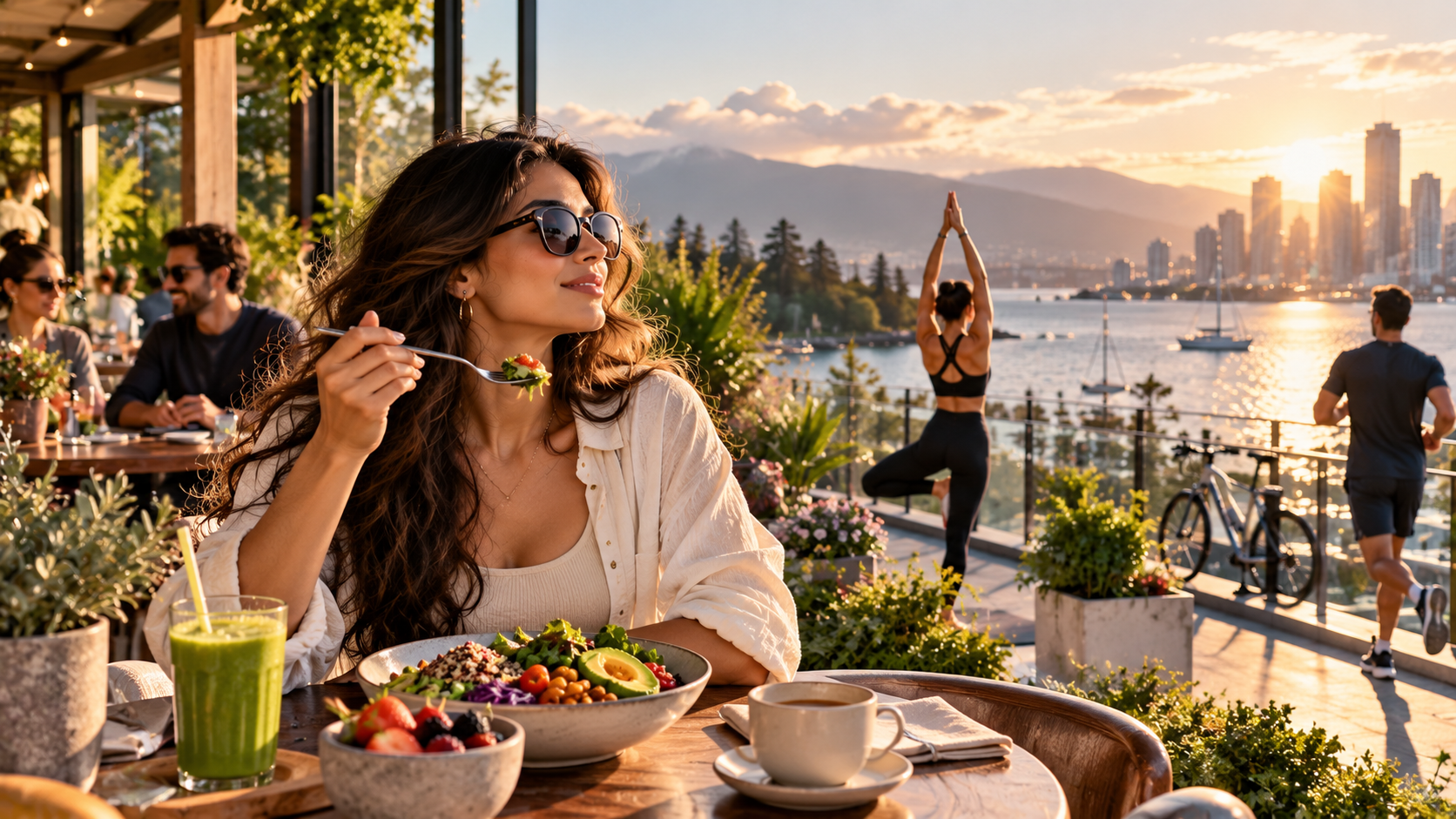
A colourful bowl of vegetables is no longer presented only as something someone “should” eat. It becomes part of an attractive lifestyle: good food, good surroundings, good company and a sense of wellbeing.
That distinction is important.
People rarely build sustainable habits because they have been lectured into them. They are more likely to adopt behaviours that appear enjoyable, realistic and compatible with the life they already want.
Creators are particularly effective at demonstrating that connection.
Movement Without the Gym Identity
The same shift is happening with exercise.
Fitness content was once dominated by transformation photographs, intense training plans and highly athletic bodies. Those formats remain popular, but movement content has expanded dramatically.
Walking has become content. Stretching has become content. Cycling through a city, taking the stairs, swimming, hiking, dancing and simply spending more time outside can all now appear within a healthy lifestyle narrative.
For audiences who do not identify with traditional gym culture, this matters.
It communicates a simple idea: movement does not have to become your personality before it can improve your life.
A healthier lifestyle can begin with something as ordinary as going outside more often.
Wellness Is Moving Beyond Appearance
Perhaps the most positive development is that wellbeing is becoming less exclusively connected to appearance.
Creators increasingly talk about sleep, energy, stress, routines, boundaries and mental reset alongside food and exercise.
A healthy day is not necessarily the day with the hardest workout.
It may be the day someone slept properly, ate well, took a long walk, finished work at a reasonable time and had dinner without staring at a screen.
This wider definition of wellness reflects something people are beginning to understand more clearly: health is not one behaviour. It is a system.
Food affects energy. Sleep affects appetite. Movement affects mood. Stress influences almost everything.
When creators show those relationships through ordinary daily life, wellness becomes easier to understand.
The Power of Making Good Choices Look Normal
Culture is shaped partly by repetition.
When people repeatedly see something, it begins to feel normal.
That is where creators have unusual influence.
If a feed constantly celebrates excess, consumption and exhaustion, those behaviours can start to appear desirable. But the opposite is also possible.
Repeated images of cooking, walking, spending time outdoors, taking breaks, eating with friends or building calm routines can slowly change what audiences associate with a good life.
Creators do not need to become health educators for that influence to exist. Sometimes simply showing a different version of success is enough.
But Influence Comes With Responsibility
The wellness space also demonstrates the risk of creator influence.
Health information can easily move beyond inspiration and into advice.
A personal routine may work well for one person and badly for another. A restrictive diet can be presented as discipline. A supplement can be promoted as a solution. A dramatic transformation can hide what happened behind the camera.
The line between lifestyle content and health guidance can become blurry very quickly.
That makes transparency increasingly important.
Creators do not need medical qualifications to share their own experiences. But personal experience should not automatically be presented as universal truth.
There is a meaningful difference between “This helped me” and “This will fix you.” Responsible wellness content understands that difference.
The End of Perfect Wellness
Audiences may also be becoming more sceptical of perfection.
Perfect kitchens, perfect bodies, perfect routines and perfectly organised mornings can be beautiful to watch, but they are difficult to live.
The next phase of wellness content may therefore become more human.
Missed workouts. Simple meals. Busy days. Rest days. Ordering dinner instead of cooking. Starting again after losing momentum.
Those moments may appear less impressive on camera, but they can build more trust.
And trust is increasingly becoming the most valuable form of influence.
Healthy Living as an Everyday Luxury
There is another shift happening at the same time.
As modern life becomes faster, noisier and more digital, simple healthy experiences are beginning to feel increasingly valuable.
A slow breakfast. Fresh food. A walk by the water. An hour without notifications. A full night of sleep. Time outdoors.
These are not traditionally described as luxury, but they represent something many people increasingly want: control over their time, attention and wellbeing.
Creators who understand this are not simply promoting health. They are helping redefine aspiration.
Influence That Lasts Beyond the Screen
The most powerful lifestyle content may ultimately be the content people stop thinking about.
Someone sees a creator walking every morning and begins walking too. Someone watches a simple recipe and makes it the following week. Someone hears repeated conversations about sleep and finally starts protecting their evenings.
There may be no dramatic transformation. There may never be a viral moment. But a behaviour changes.
That is influence in its most practical form.
A Healthier Creator Culture
The creator economy is often measured through followers, views, engagement and sales.
There is another measurement worth considering: what habits are being normalised?
Creators now occupy a meaningful place inside modern lifestyle culture. With that position comes an opportunity to make health feel less intimidating, less extreme and more compatible with ordinary life.
They do not need to tell audiences exactly how to live.
They can simply demonstrate that a healthier life does not always require reinvention.
Sometimes it begins with better food. Sometimes with movement. Sometimes with rest. And sometimes with seeing someone else make a better choice often enough that it finally feels possible to make the same one yourself.
The most meaningful health influence may not be about convincing people to completely change their lives. It may simply be about making one better choice feel normal enough to repeat tomorrow.