The DJ Is Becoming a Global Storyteller
The modern DJ is no longer only selecting tracks — the best are shaping atmosphere, community and cultural memory across borders.
The DJ Is Becoming a Global Storyteller is ultimately about a larger shift in modern creative life: access to tools is expanding faster than ever, but meaningful work still depends on discernment. The people and brands that stand out are not simply producing more. They are becoming clearer about what deserves attention, what can be automated and what should remain unmistakably human.
This Global Creator Times editorial looks at the opportunity through a practical lens. The aim is not to romanticize the past or reject new technology. It is to understand how creators, performers and modern professionals can use new possibilities without surrendering the qualities that make an audience care in the first place.
Music travels differently now
A track can cross borders in hours, but global access does not make culture interchangeable. The artists who last tend to keep something recognizable in the work — a voice, rhythm, language, attitude or story that cannot be confused with anyone else.
For music, this matters because visibility is no longer the hardest problem. The harder problem is coherence: making sure the work, the public identity and the choices behind them point in the same direction. When that coherence exists, audiences can feel it even before they can explain it.
Technology should increase possibility
AI and production software can lower technical barriers and help independent artists work faster. The danger appears when efficiency becomes the creative objective. Listeners rarely fall in love with a perfectly optimized workflow; they respond to feeling.
For music, this matters because visibility is no longer the hardest problem. The harder problem is coherence: making sure the work, the public identity and the choices behind them point in the same direction. When that coherence exists, audiences can feel it even before they can explain it.
Live spaces still create meaning
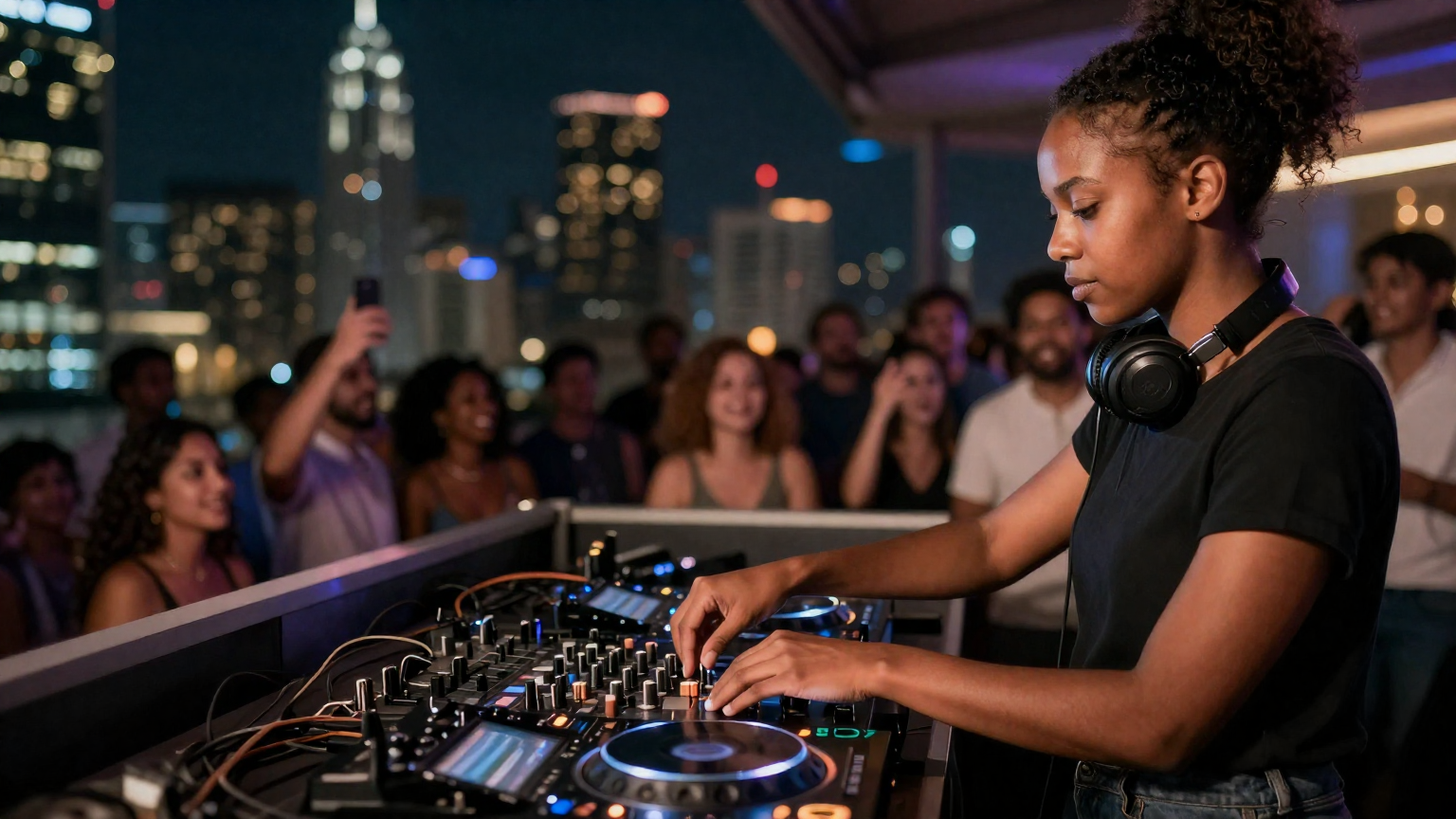
Studios, clubs and performance spaces are where music becomes social. DJs, performers and audiences create a shared atmosphere that cannot be fully reproduced by an algorithmic recommendation. That human feedback loop remains one of music culture’s most powerful engines.
For music, this matters because visibility is no longer the hardest problem. The harder problem is coherence: making sure the work, the public identity and the choices behind them point in the same direction. When that coherence exists, audiences can feel it even before they can explain it.
Independent does not mean isolated
Artists can now build teams project by project: producers in one country, visual collaborators in another, audiences everywhere. Independence works best when it means control and intentional collaboration, not trying to do absolutely everything alone.
For music, this matters because visibility is no longer the hardest problem. The harder problem is coherence: making sure the work, the public identity and the choices behind them point in the same direction. When that coherence exists, audiences can feel it even before they can explain it.
A practical next step
Identify one signature element in your work — a sound, visual language, lyrical perspective or live ritual — and make it more intentional. Global reach becomes stronger when people can recognize what makes the work yours.
The bigger idea
Creative careers are rarely built by one perfect moment. They are built through accumulated choices: what to publish, what to protect, what to learn, who to work with and when to change direction. Technology can multiply those choices, but it cannot make them meaningful on our behalf.
The encouraging part is that this gives people more agency, not less. In a world where production is becoming easier, originality increasingly comes from lived experience, standards and taste. Those are slow advantages — and that is precisely why they are difficult to copy.