Is Vertical Video Becoming the New Television?
How creators, micro-dramas and the phone screen are changing the future of entertainment.
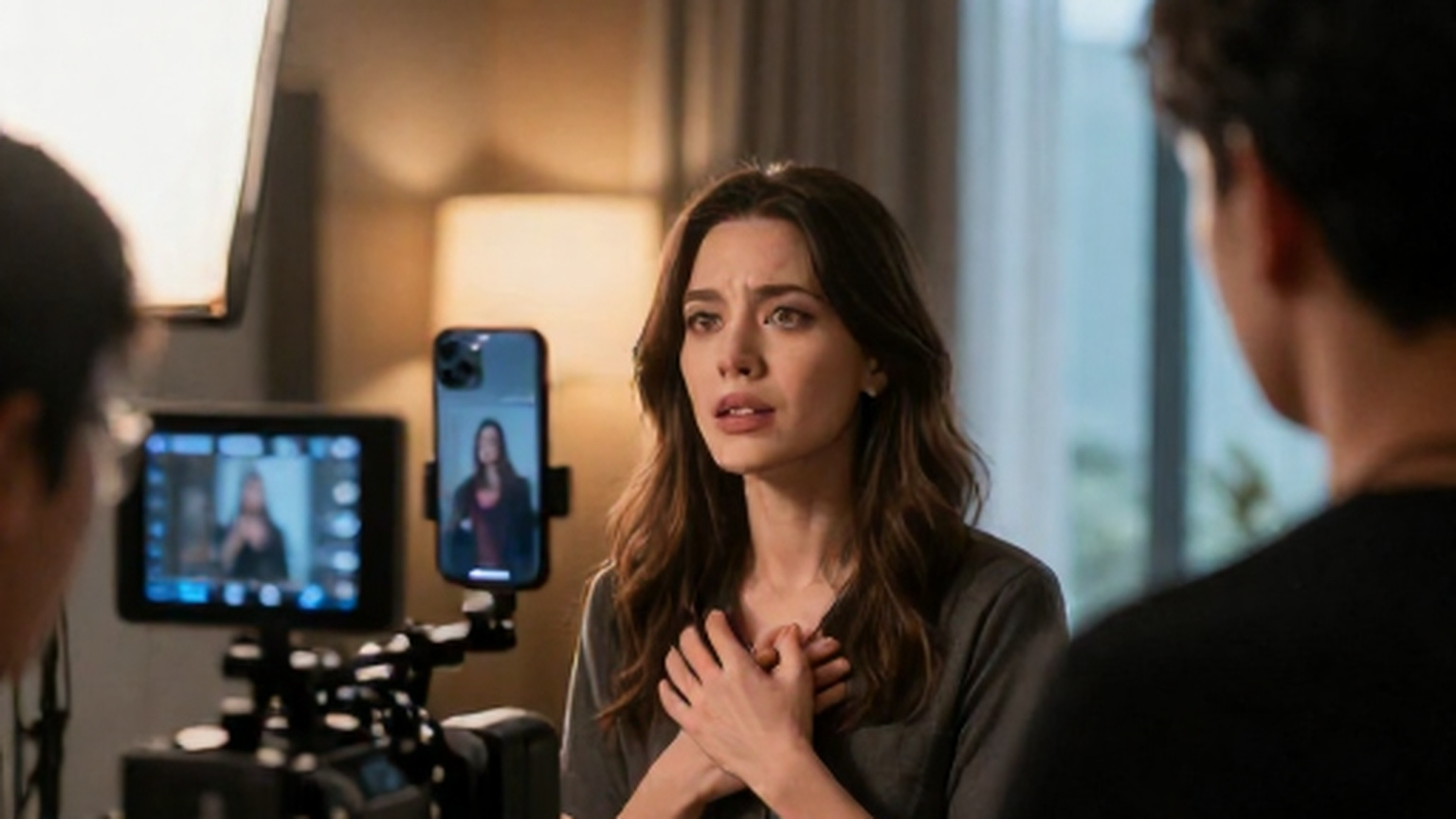
A new generation of entertainment is being designed for the screen in your hand. — GCT Editorial
What if the next hit television show isn’t made for television at all?
For decades, the shape of premium entertainment was almost taken for granted. A story was made for a cinema screen, a television set or, later, a laptop. The phone was where audiences discovered clips, trailers and creators. It was not supposed to be the place where serious scripted entertainment lived.
That distinction is beginning to blur. Vertical video is moving beyond the language of short clips and into episodic storytelling, with creators, studios and platforms experimenting with dramas designed from the first frame for the screen people already carry in their hands.
The shift became harder to dismiss this week. TikTok and MADE BY US STUDIOS announced a strategic partnership to co-produce a slate of premium, creator-led vertical micro-series for TikTok and PineDrama. The first projects include Player, a romantic revenge thriller starring creator Hannah Stocking, and The Knock, starring creator and actor Adam Rose opposite Zaria Simone.
This is not simply a social platform commissioning more content. It points to a larger question for the creator economy: what happens when the creator, actor, studio and distribution platform begin merging into one entertainment ecosystem?
The phone is no longer just the second screen
Short-form video trained audiences to hold the phone vertically, scroll quickly and make instant decisions about what deserves attention. But the same screen can also hold a continuing story. Instead of asking viewers to rotate a device or move to another platform, vertical dramas meet the audience in the viewing behaviour it already knows.
That does not mean a vertical series is simply conventional television squeezed into a narrower frame. Composition changes. Close-ups become more powerful. Characters occupy more of the screen. Scenes have to establish stakes quickly, and episodes often end with a reason to continue. The rhythm is closer to the feed, while the ambition increasingly resembles scripted entertainment.
Evidence of audience appetite is emerging quickly. TikTok says Screen Time, the micro-series it launched with HOORAE earlier in 2026, has accumulated nearly 580 million global views across TikTok and PineDrama. Earlier reporting by the Los Angeles Times described the project as a 57-part vertical thriller and documented a production process that looked much closer to a professional film set than an improvised social clip.
From creator to character to franchise
The creator economy was initially built around personality. A creator developed an audience, posted consistently and monetised attention through advertising, sponsorships, products or subscriptions. Scripted vertical entertainment adds another possibility: the creator can become part of intellectual property that lives beyond an individual post.
A creator may now arrive with something traditional casting could rarely guarantee in advance — an existing audience, a direct relationship with that audience and an instinct for how people behave inside a feed. Studios bring writers, directors, production discipline and franchise development. Platforms bring distribution and data. Put those pieces together and the creator can move from making clips to starring in, producing or helping shape an episodic world.
The progression is becoming easier to imagine: 15-second clip → creator → episodic storytelling → premium vertical series → entertainment franchise.
That is why the current moment matters. It is not about declaring every influencer an actor or every vertical series the future of Hollywood. It is about creators gaining another route into entertainment — one that does not require abandoning the audience or format that made them visible in the first place.
Micro-dramas are becoming a business, not just an experiment
The economics are also attracting attention. Reuters Breakingviews reported this week that microdramas are expanding rapidly in the United States after becoming a major business in China, with specialised apps and social platforms competing for mobile-first viewing time. The format can be produced more cheaply than conventional television, released quickly and monetised through advertising, subscriptions or paid episode access.
Those economics do not guarantee quality. Cheap production can create disposable storytelling just as easily as it can create experimentation. But lower barriers allow producers to test more concepts, creators and genres. The winners can then be expanded, remade or developed into larger franchises.
This resembles an old entertainment principle operating at internet speed: find an audience, learn what connects, then invest behind the signal. The difference is that the signal may now arrive directly from the creator’s community rather than from a pilot episode tested through traditional television infrastructure.
Vertical changes the visual language
A 9:16 frame creates its own grammar. Wide establishing shots have less room. Two-person scenes require different blocking. Faces, hands, objects and messages can become unusually intimate. The phone fills more of a viewer’s field of vision when held close, which can make a character feel almost conversational.
That intimacy is one reason the format suits creators. Social audiences are accustomed to seeing a person speak directly into a phone. Scripted vertical drama can borrow that familiarity without remaining a vlog. The production may be professional, but the screen still feels personal.
The strongest vertical storytelling will therefore probably not come from copying television shot-for-shot. It will come from directors and creators discovering what this frame does uniquely well — just as cinema, television, music videos and social clips developed their own visual conventions over time.
Does this mean television is disappearing?
No. Large screens still offer scale, shared viewing and cinematic immersion that a phone cannot reproduce. Even Issa Rae, whose HOORAE helped create Screen Time, told the Los Angeles Times earlier this year that she did not expect vertical video to replace television and film.
The more interesting possibility is coexistence. “Television” may increasingly describe a level of storytelling rather than a physical box in a living room. A franchise could begin on a phone, develop a global audience, expand into longer episodes, cross into streaming or live experiences, and continue across several formats at once.
For audiences, the boundary between social media and entertainment is already porous. A trailer becomes a meme. A creator becomes an actor. A behind-the-scenes clip becomes part of the marketing. A character continues living through social accounts between episodes. Distribution is no longer something that happens only after production; it can be built into the concept from the beginning.
What this means for creators
For creators, the opportunity is larger than “make longer videos.” The valuable skills are expanding: character development, writing, performance, production, directing, rights ownership, audience development and collaboration with professional crews. Creators who understand both storytelling and community may become unusually valuable bridges between internet culture and traditional entertainment.
It also raises harder questions. Who owns the character? Who controls the series if it becomes a franchise? How are creators paid when their audience helps de-risk a production? Does a platform relationship limit distribution elsewhere? As creator-led entertainment becomes more professional, contracts and intellectual-property decisions will matter as much as follower counts.
The next generation of creator businesses may therefore look less like individual channels and more like small media companies: talent at the front, production capability behind them, owned ideas in the middle and multiple distribution paths around them.
A new screen, not a smaller television
The most important shift may be conceptual. Vertical entertainment does not need to win a competition against television to matter. It only needs to become a credible storytelling format of its own.
People once treated online video as a lower tier of entertainment. Creators changed that assumption. Now the same cycle may be happening again with scripted vertical stories. Professional crews are entering the frame. Platforms are investing. Creators are moving into leading roles. Audiences are proving willing to follow stories one vertical episode at a time.
The television set is not going away. But the definition of television may be getting much bigger — while the screen itself gets smaller.
Sources & reporting
This GCT analysis draws on TikTok’s October 14, 2026 announcement of its MADE BY US STUDIOS partnership and its reported performance for Screen Time; independent reporting from TheWrap on the partnership; Los Angeles Times reporting on the production of Screen Time; and Reuters Breakingviews reporting on the global microdrama business. Figures attributed to companies are identified as such.