The New Language of Quiet Luxury
Why modern luxury is moving beyond logos and embracing tailoring, texture and individual style.
Luxury Without the Announcement
For much of the last two decades, luxury spoke loudly. Logos covered fabric. Monograms became the point, not the finishing touch. That era has not disappeared entirely, but it has been joined—and in many circles, overtaken—by something quieter.
Quiet luxury asks a different question: what does the garment itself say, once the branding is removed? The answer, increasingly, is that it says quite a lot—through cut, through fabric, through the kind of construction that only becomes obvious up close.
Tailoring as the Statement
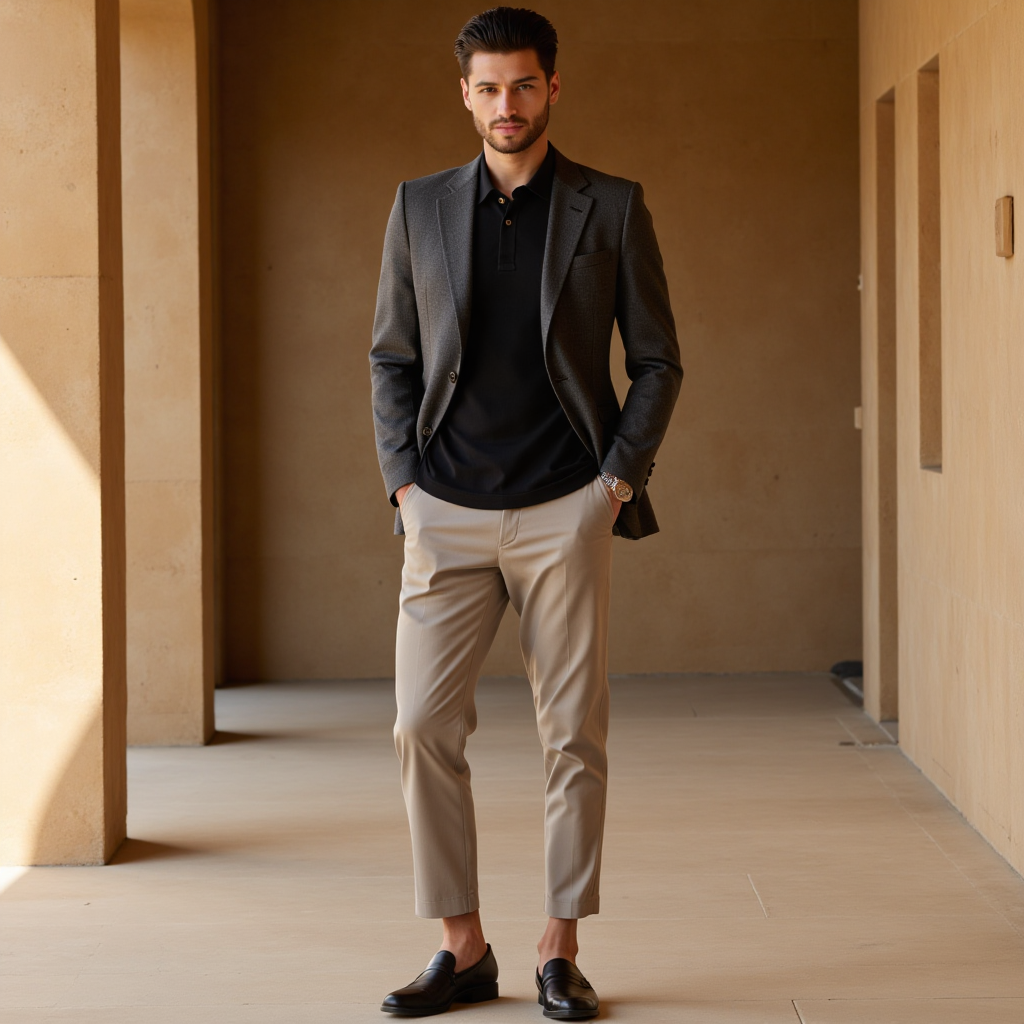
A well-cut blazer does more work than any logo could. Structure through the shoulder, a clean break at the sleeve, proportion that fits the body rather than fighting it—these are the details quiet luxury is built on.
Paired with a simple knit and straight, unfussy trousers, the look depends entirely on fit and fabric to carry it. There is nowhere for poor construction to hide, which is precisely the point. Restraint raises the bar rather than lowering it.
Texture Over Ornamentation
Where maximalist luxury reached for embellishment, quiet luxury reaches for texture: the weight of a wool-blend jacket, the density of a knit polo, the way good leather ages differently than synthetic alternatives.
These are details felt more than seen at a glance—which is exactly why they read as considered rather than performative. The wearer isn't dressing for a photograph. The clothing is doing its job regardless of who's watching.
A Watch, Not a Logo
The single visible accessory in a quiet luxury look tends to carry more meaning than an entire monogrammed accessory line. A watch, chosen deliberately rather than displayed prominently, signals taste through restraint rather than volume.
It's a small detail, but it captures the broader philosophy: one considered choice communicates more than several loud ones.
Why the Shift Matters
Quiet luxury isn't simply a passing trend cycle—it reflects a broader recalibration in how personal style signals status and taste. As logo-driven branding became accessible to a much wider price range, its exclusivity diminished. What remained genuinely difficult to replicate was quality construction, fit, and the kind of restraint that requires actual confidence rather than visible reassurance.
That's the real appeal: quiet luxury doesn't need anyone to recognize the brand to know the garment is good. The proof is in how it's made, not what it announces.